
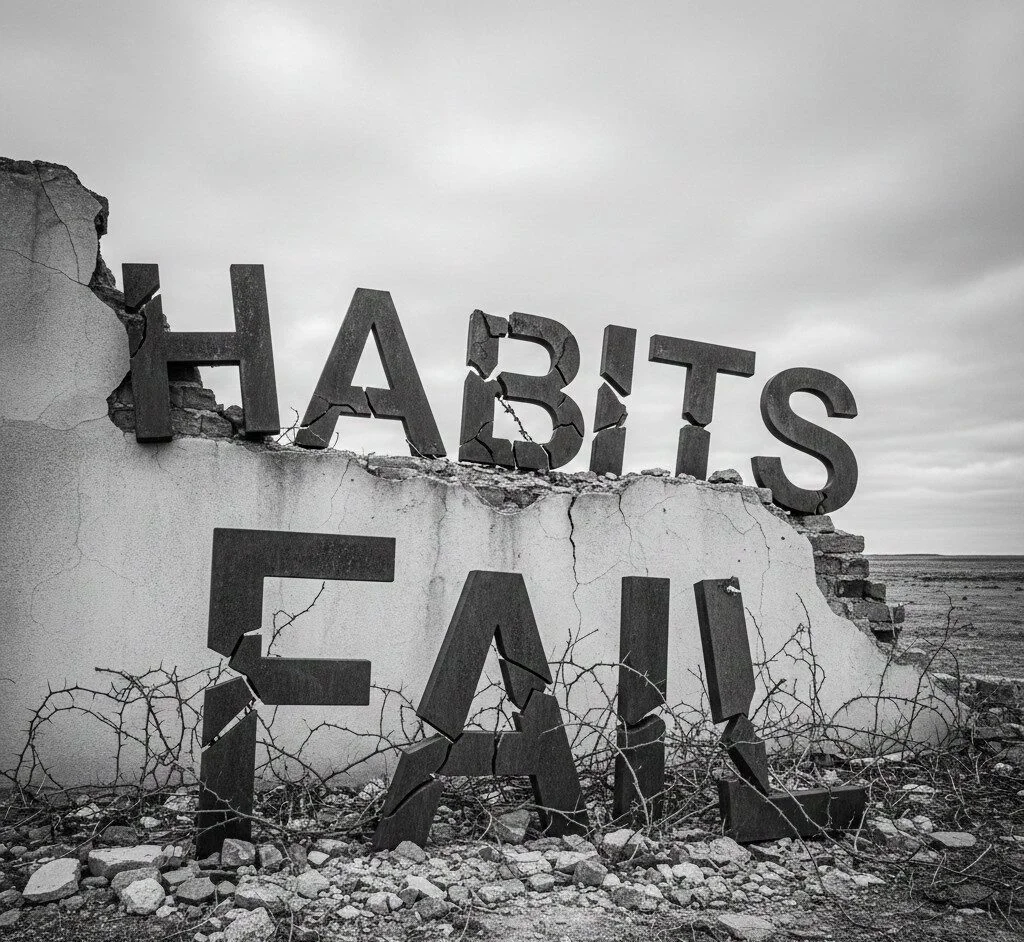
Why Most Habits Fail (And What Actually Makes Them Stick)
We all begin with good intentions. We promise ourselves we’ll exercise more, wake up earlier, eat healthier, reduce screen time, or finally stick to a daily routine. At the beginning, motivation is high and everything feels possible—yet this is often the exact moment when Habits Fail, not because we lack discipline, but because we haven’t built the right system to sustain them.
But then something happens.
A few days or weeks later, the habit fades. Life gets busy. Motivation drops. The routine disappears. And we’re left wondering the same frustrating question: why do most habits fail even when motivation is high?
Habit Formation Failure: A Clear Overview
When Habits Fail, most people blame willpower. But willpower is unreliable. It fluctuates based on stress levels, sleep quality, emotional state, and environmental factors. This is why, when Habits Fail, the real issue is rarely a lack of discipline—it’s a system that doesn’t support consistent behavior.
Successful habit change isn’t about forcing yourself to do more. It’s about designing habits that work with your brain instead of fighting against it.
Through research and real-world experience working with thousands of individuals, several common reasons appear again and again when habits fail.
The answer might surprise you. It’s not laziness. It’s not lack of discipline. And it’s definitely not a personal failure.
Habits fail because most people are taught the wrong way to build them. Understanding why daily habits fail is essential if you want to build routines that actually support productivity, focus, and long-term consistency. Without the right habit system, even the best intentions collapse over time.
In this article, you’ll learn the real science behind habit formation, why habits fail, why habits fall apart, and—most importantly—what actually helps habits stick long term. This in-depth breakdown explains why habits fail using proven behavioral psychology, modern habit research, and years of real-world experience helping people create sustainable change.

Why Habits Fall Apart: The Real Reasons
Most failed habits break down for one (or more) of the following reasons:
1. Inconsistency Over Time
People often start strong but fail to maintain momentum. Motivation fades, and without a system in place, the habit collapses.

2. No Clear Trigger or Cue
One of the main reasons Habits Fail is the absence of a clear trigger. If your habit isn’t tied to a specific time, place, or action, your brain doesn’t know when to perform it. Without a defined cue, the behavior relies purely on motivation, which is unreliable and inconsistent.

3. Weak or Missing Rewards
If your brain doesn’t receive a reward—emotional, physical, or psychological—it has no reason to repeat the behavior.

4. Low Meaning or Motivation
Habits that don’t connect to personal values or identity rarely last.
These aren’t personal flaws. They’re missing pieces of the habit-building process. And the good news? Every single one of them is fixable. For practical examples of habits that actually stick, check out Habits That Stick: 24 Easy Micro-Habits to Change Your Life.

Why Your Environment Matters More Than Motivation
One of the most overlooked drivers of habit success is environment.
Your surroundings influence your behavior far more than motivation ever will. What you see, where you are, and who you’re with all shape your decisions.
Examples:
-
Want to read more? Put a book on your pillow.
-
Want to eat healthier? Place fruit at eye level in your fridge.
-
Want to reduce phone usage? Keep your phone out of reach.
When the environment supports the habit, willpower becomes unnecessary.
The core principle is simple:
Make the desired behavior easier—and the unwanted behavior harder.
This concept is explored deeply in Your Habit Blueprint, but the takeaway is universal: environment design beats motivation every time.
Check out this helpful video, for practical tips and demonstrations.

The Myth of Intensity in Habit Building
Many people believe that intensity equals commitment. They try to change everything at once—long workouts, strict routines, extreme schedules.
But research consistently shows that intensity is not what builds habits.
Consistency does.
Small actions performed daily are far more powerful than large actions performed occasionally. To see specific habits that can boost your focus, read How to Improve Productivity: 6 Habits That Boost Your Focus. A five-minute habit done every day beats an hour-long habit done twice a week.

Leveraging Technology to Build Better Habits
Technology isn’t the enemy. When used intentionally, it can become one of your strongest habit-building tools.
How Technology Supports Habit Adherence
-
Set reminders and alarms for cues
-
Use habit-tracking apps to monitor progress
-
Track streaks for motivation
-
Use smart devices for accountability
Technology can act as your cue, coach, and progress tracker all at once.
The key is using tech to support behavior—not distract from it.

Intrinsic Motivation: The Real Fuel for Lasting Habits
One of the most important questions in habit coaching is:
“Why do you want this habit?”
If the answer is external—“I should,” “they told me to,” or “I feel pressured”—the habit will likely fail.
But when a habit connects to:
-
Personal values
-
Long-term goals
-
Identity
Intrinsic motivation creates emotional rewards, which strengthens the habit loop and increases long-term success.

Social Support: The Hidden Accelerator of Habit Success
Humans are social by nature. Habits are easier to maintain when others are involved.
Whether it’s:
-
A friend checking in
-
A partner joining you
-
A community sharing progress
-
An online accountability group
Social reinforcement increases consistency, motivation, and follow-through.
Even small social connections can dramatically increase your success rate.

Habit Tracking: The Secret to Staying Consistent
If you’re not tracking your habits, you’re missing a powerful reinforcement tool.
Tracking creates:
-
Awareness
-
Accountability
-
Motivation
-
Visual proof of progress
It doesn’t need to be complex. A calendar checkmark, a journal note, or an app tap is enough.

How Long Does It Really Take to Build a Habit?
You’ve probably heard the myth: “It takes 21 days to form a habit.”
That’s not true.
Research shows habit formation can take anywhere from 18 to 254 days, depending on the habit and the individual, as referenced in studies included in Dr. Cleo’s Your Habit Blueprint.

Key Takeaways: How to Make Habits Stick
To build habits that last, stop relying on willpower and start using systems.
✅ Create a clear habit loop (cue → routine → reward)
✅ Design your environment to support success
✅ Focus on consistency over intensity
✅ Align habits with your values and identity
✅ Use tools, tracking, and community support
✅ Celebrate small wins
This is the exact framework taught in my programs and used to help thousands of people create lasting change.
For a complete breakdown of daily habits that improve focus, productivity, and long-term success, explore this complete guide to daily habits.

Final Thoughts: Build the Life You Want, One Habit at a Time
Habits are the invisible architecture of your life. Every small action compounds over time.
You don’t need radical change. You need intentional systems, patience, and consistency.
Start small. Stay consistent. Let your habits do the heavy lifting.
And if you’re ready to go deeper, explore my tools and courses—because the life you want is built one habit at a time.

FAQ: Habit Formation & Behavior Change
1. Why do habits fail even when motivation is high?
Motivation is temporary. Habits fail when there’s no system, cue, or reward to support behavior once motivation fades.
2. Is willpower important for building habits?
Willpower helps at the start, but environment design and consistency matter far more for long-term success.
3. What is the habit loop?
The habit loop consists of a cue (trigger), routine (behavior), and reward (benefit). All habits follow this structure.
4. How long does it take to build a habit?
Depending on complexity, habit formation can take between 18 and 254 days.
5. Are small habits really effective?
Yes. Small habits are easier to repeat consistently, which is the key driver of long-term change.
6. Do habit-tracking apps actually help?
Yes. Tracking increases awareness, motivation, and accountability—key factors in habit success.
7. What role does environment play in habit formation?
Environment strongly influences behavior. Making habits easier through design reduces reliance on willpower.
8. Why do habits linked to identity last longer?
When habits align with identity and values, they create intrinsic motivation, making them more sustainable.
Written by the Daily Problem Solved editorial team.
Content reviewed for accuracy and clarity.


